Seasons: Choose Conditions Wisely
Norway cannot be reduced to a single summer high season. The personality of its landscapes shifts completely based on solar elevation and mountain snowpack.
Visiting in November brings eerie twilight pastel gradients, while June delivers perpetual daylight where ridge hikes can be completed at 2:00 AM under unsetting golden sun. Making the right choice requires aligning your terrain goals with real meteorological windows.
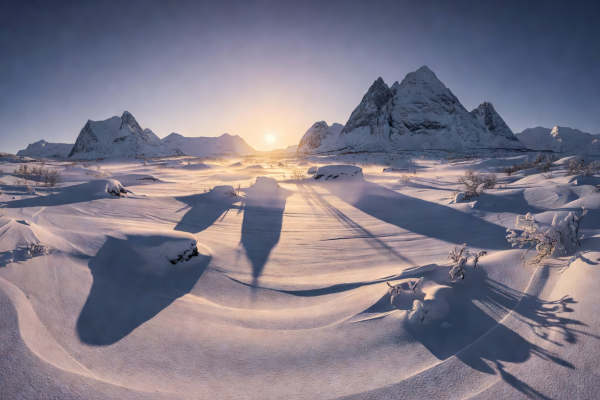
Seasonal Condition Matrix
| Season | Solar Environment | Terrain Reality | Primary Geographic Objective |
|---|---|---|---|
| Winter (Dec – Feb) | Polar Night (Mørketid) to faint twilight. Total darkness enables 15+ hours of daily aurora watch. | Heavy snow, black ice, and mountain pass closures (kolonnekjøring). Requires winter tires and crampons. | Auroral observation, frozen waterfalls, coastal arctic light in Tromsø and Senja. |
| Spring Thaw (Apr – May) | Rapid daylight return. Crisp high-sun angles with bright reflections off vast snowfields. | Snowmelt runoff, wet avalanches on steep faces, swollen waterfalls; higher hiking trails remain snow-buried. | Fjord cruising with roaring waterfalls in Geiranger; ski-touring in Sunnmøre and Lyngen. |
| High Summer (Jun – Aug) | Midnight Sun north of the Arctic Circle; 20+ hours of light in southern fjord country. | High passes clear by late June. Dry granite ridges accessible for trekking without artificial light. | Multi-day ridge traversing in Lofoten, Jotunheimen, Hardangervidda, and Senja. |
| Autumn (Sep – Oct) | Equinox equilibrium. Return of astronomical darkness combined with fiery birch tundra colors. | Lower precipitation than winter initially, but sharp drops in temperature and first mountain frost. | Early auroras over vibrant autumn foliage; crisp, clear hiking days before winter snow arrives. |
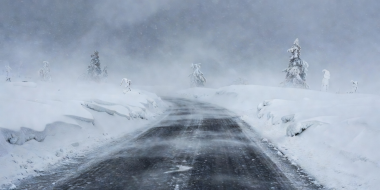
Deep Arctic Winter
Sub-zero conditions transform mountain runoff into towering blue ice cataracts, and calm coastal waters reflect the midnight green glow of geomagnetic storms.
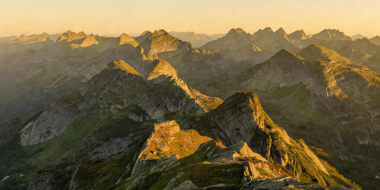
Continuous Midnight Sun
High mountain ridges become passable 24 hours a day without flashlights, offering unparalleled flexibility to hike during uncrowded nocturnal hours.
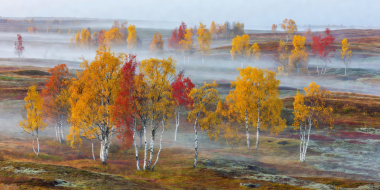
Crisp Autumn Equinox
Mountain birch turns fiery amber and crimson across the valleys, skies turn astronomically black at night, and tourist concentrations evaporate.
The Danger of the "Shoulder Season" Trap
Many visitors assume that May is an ideal hiking month because it is spring across mainland Europe. In the Norwegian high country, May is the peak of the vårflom (spring thaw). Mountain routes above 600 meters are often impassable slush fields with hidden snow bridges collapsing over raging meltwater streams.
If your goal is open alpine footpaths, plan strictly between early July and mid-September. If your goal is pristine winter snow and auroral arcs, aim between late November and early March.